
Be Advised: Major Changes to Rhode Island Short-Term Rentals Began in January 2026
🚨 Be Advised: Major Changes to Rhode Island Short-Term Rentals Began in January 2026
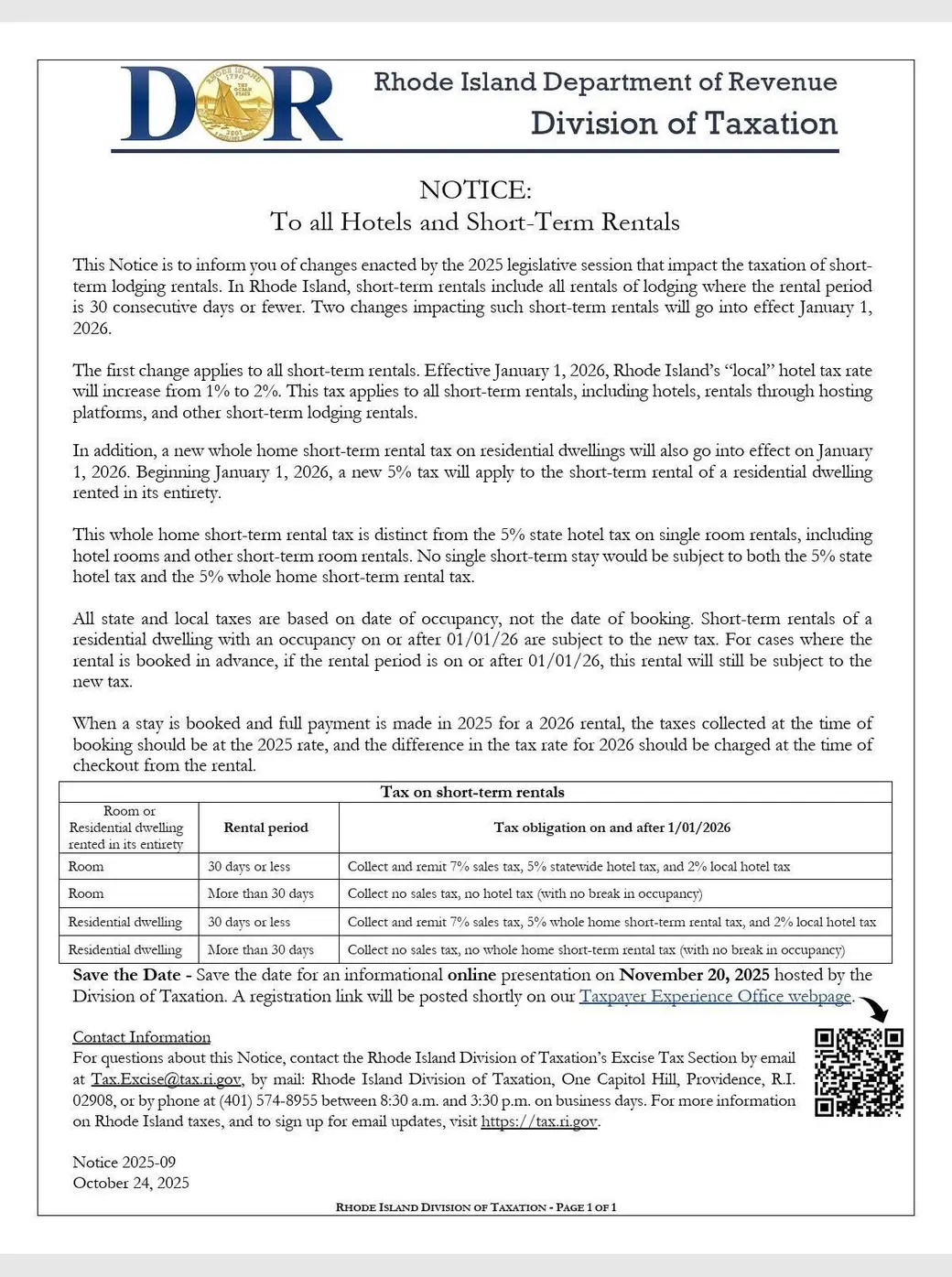
If you own, manage, or are considering investing in a short-term rental (STR) in Rhode Island, be advised that big changes are now in effect as of January 2026. These updates directly impact your taxes, compliance responsibilities, and overall rental strategy.
Whether you rent on Airbnb, Vrbo, Booking.com, or independently, these rules apply to you.
Here’s what you need to know.
📌 What’s Changed?
✅ New 5% “Whole-Home” Tax
The most significant update is a brand-new 5% tax on whole-home short-term rentals.
This applies when you rent an entire residence — such as a house, condo, cottage, or apartment — for 30 days or less.
This is a statewide change that specifically targets full-property rentals rather than individual rooms.
📈 Local Hotel Tax Increased from 1% to 2%
All short-term rentals — both whole-home and room rentals — are now subject to a 2% local lodging tax, doubling the previous rate.
🧮 What Does This Mean for Total Taxes?
Here’s how the totals break down:
🏡 Whole-Home Rentals (Entire Property) — 14% Total
-
7% State Sales Tax
-
5% New Whole-Home STR Tax
-
2% Local Tax
👉 Total: 14% charged to guests
🛏️ Room Rentals (Owner-Occupied) — 13% Total
-
7% State Sales Tax
-
4% State Hotel Tax
-
2% Local Tax
👉 Total: 13% charged to guests
In simple terms:
➡️ Whole-home rentals are now taxed 1% higher than room rentals.
🚨 New Training Requirement: Human Trafficking Prevention
Beginning in 2026, all short-term rental operators and hotel owners must complete human trafficking prevention training approved by the Rhode Island Department of Business Regulation (DBR).
This is now a legal requirement. Failure to comply could result in penalties or compliance issues.
🧾 Hosts Are Responsible for Taxes
Even if platforms like Airbnb or Vrbo collect some taxes on your behalf, you remain responsible for ensuring the correct taxes are collected and properly remitted to the state.
It’s critical to review your listings and accounting to avoid mistakes.
✅ What You Should Do Now
If you currently operate — or plan to operate — a short-term rental in Rhode Island, take these steps:
1️⃣ Review your tax classification — determine whether you are considered a whole-home rental or a room rental.
2️⃣ Adjust your pricing if needed — account for the new tax structure.
3️⃣ Complete the required training — sign up for DBR-approved human trafficking prevention training.
4️⃣ Check local rules — many Rhode Island towns have their own STR ordinances, permits, or registration requirements.
Thinking About Buying or Selling an STR?
These changes matter — they affect rental profitability, compliance, and property value.
If you’re considering:
• Buying an Airbnb
• Selling a short-term rental
• Converting a property into an STR
• Investing in Rhode Island vacation rentals
I can help you analyze the numbers, understand the laws, and make informed decisions.
📲 Reach out anytime — I specialize in helping investors and homeowners navigate short-term rentals in Rhode Island.
—
Thomas Goss | Goss Team Realty
Real Broker RI
#WhoYouHireMatters
Categories
Recent Posts







GET MORE INFORMATION